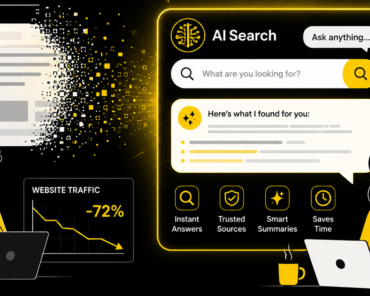
Ten years ago, ranking on page one of Google was the finish line. Today, that finish line has moved — and it’s sitting inside a chat window.
Millions of people now ask ChatGPT, Gemini, Perplexity, and Claude questions they used to type into Google. “Best digital marketing agency in Kerala.” “Which accounting institute should I join for CA Foundation?” “How do I fix duplicate URLs on my WordPress site?” These are real searches, except now they don’t end in ten blue links. They end in one AI-generated answer, built from a handful of sources the model trusts enough to quote.
If your website isn’t one of those sources, you don’t just rank lower — you disappear from that conversation entirely.
This guide breaks down exactly how to rank in ChatGPT search, and more broadly, how to make your website visible across every major AI chatbot. No jargon for the sake of jargon. Just what actually works in 2026.
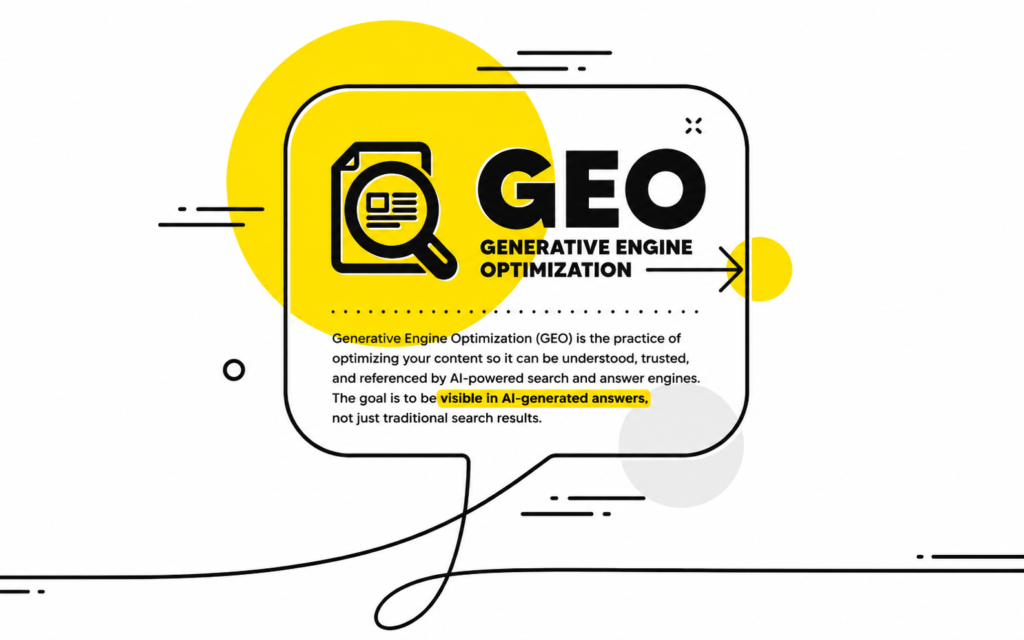
What Is GEO (Generative Engine Optimization)?
Generative Engine Optimization, or GEO, is the practice of structuring and building your website so AI models choose to cite it when generating an answer. Think of it as SEO’s younger sibling — it shares the same parents (authority, relevance, trust) but behaves differently.
Traditional SEO asks: “How do I rank this page for a keyword?” GEO asks: “How do I become the source an AI model trusts enough to quote?”
That shift changes almost everything about how you should write, structure, and promote content. A page built to rank on Google can hold back its best insight until paragraph six, hoping to keep readers scrolling. A page built for AI citation has to lead with the answer, because the model is scanning for exactly that — a clear, self-contained response it can lift and use.
Why Ranking in ChatGPT Search Actually Matters Now
ChatGPT alone processes billions of conversations every month, and a growing share of them are people looking for products, services, and businesses to hire — not just trivia answers. When someone asks ChatGPT to recommend a digital marketing agency or an accounting course, the businesses that show up in that answer get a warm, pre-qualified lead. The ones that don’t show up simply never enter the conversation.
Here’s the part that should really get your attention: once an AI model recommends something, users rarely double-check it on Google. They trust the answer and act on it. That means visibility inside AI answers isn’t a nice-to-have anymore — it’s becoming the new front door to your website.
And there’s good news buried in this shift too. Most businesses are still optimizing exclusively for Google’s blue links. That means the competition for AI visibility is still thin in most niches — which is exactly the kind of gap smart marketers move fast on.
How ChatGPT Actually Finds and Chooses Sources
Before optimizing for something, it helps to understand how it works.
ChatGPT’s search function leans heavily on Bing’s web index, not Google’s. That single fact changes your entire strategy — a site that ranks well on Bing tends to rank well inside ChatGPT’s answers too. Most businesses have never touched Bing Webmaster Tools. That’s a mistake worth fixing today.
Beyond indexing, AI models generally look for three things when deciding what to cite:
None of this is mysterious once you see it laid out. It’s the same trust-building work good marketers have always done — just applied to a new kind of reader that happens to be a language model.
1.Structure Content So AI Can Actually Extract It
AI models don’t read your page the way a human does, scanning top to bottom and building context slowly. They pattern-match for clear, quotable chunks of information. If your content buries the answer under three paragraphs of introduction, it’s far less likely to get picked up.
What works:
- Answer first, explain after. Put the direct answer to the implied question in the first 40–60 words of a section, then elaborate below it.
- Use real questions as headings. Instead of “Our Services,” try “What Services Does [Business Name] Offer?” AI models are pattern-matching against how people actually phrase questions in chat.
- Keep answers between 80–150 words for the core response, even if you expand further afterward. This length performs noticeably better for AI extraction than the ultra-short 25–30 word snippets built for old-school Google featured snippets.
- Break information into lists, tables, and short paragraphs. Walls of text are hard for both humans and models to parse quickly.
- Add an FAQ section to every important page. Real questions, direct answers, no filler.
This is also just good writing. Clear structure helps human readers skim, decide faster, and trust you more — the AI-friendliness is a side effect of writing well, not a replacement for it.
2. Add Structured Data (Schema Markup)
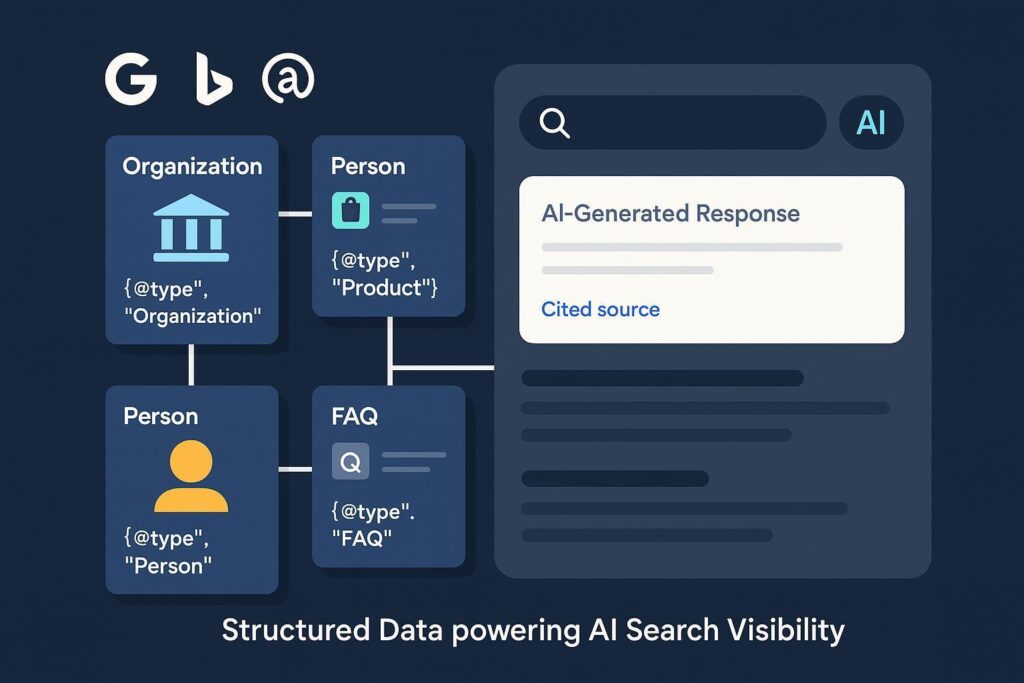
Structured data is one of the clearest, most technical wins available right now. A large share of pages that get cited by ChatGPT include schema markup — it’s one of the strongest patterns researchers have found.
The schemas worth prioritizing:
- FAQPage schema — even where Google has scaled back showing FAQ rich results visually, AI models still read this structured data independently when indexing a page.
- Article schema with a named author — this ties your content to a real person with credentials, which is a direct trust signal at the code level, not just the writing level.
- HowTo schema — useful for any step-by-step content, like “How to Register for CA Foundation” or “How to Set Up a Meta Ads Campaign.”
- LocalBusiness schema — critical if you’re trying to show up for location-based recommendations, like “best accounting institute in Guruvayur.”
If your developer hasn’t touched schema markup yet, this is one of the highest-leverage technical fixes you can make this month.
3. Build Real Topical Authority, Not Just Individual Posts
A single well-written blog post rarely earns consistent AI citations on its own. What earns trust is a content cluster — one strong pillar page on a topic, supported by several focused articles that each answer a specific sub-question, all interlinked.
For example, if you want to rank in ChatGPT search for anything related to “digital marketing for small businesses,” you’d want:
- One comprehensive pillar guide covering the topic broadly
- Supporting articles on specific pieces: social media strategy, SEO basics, paid ads, content creation
- Clear internal links connecting all of them back to the pillar and to each other
This tells both search engines and AI retrieval systems that your site isn’t just guessing at a topic — it has depth. Think of it as building a body of evidence rather than a single opinion.
4. Earn Brand Mentions, Not Just Backlinks
Traditional SEO trained everyone to chase backlinks. GEO adds a new layer: brand mentions, with or without a link attached.
AI models pull from a much wider net than just backlink profiles — they weigh how often your brand name shows up across review sites, forums, industry roundups, and other trusted publishers. A business mentioned consistently across Google Business Profile, review platforms, industry directories, and third-party articles builds a pattern the model recognizes and trusts.
Practical ways to build this:
- Get listed and keep information consistent on Google Business Profile, Yelp, and industry-specific directories
- Encourage genuine client reviews — AI models factor review sentiment into how confidently they recommend a business
- Pursue guest posts, interviews, and mentions on industry publications, even when a backlink isn’t guaranteed
- Participate authentically in relevant forums and community discussions, since some AI platforms weigh community sources heavily for certain query types
5. Keep Content Fresh and Factually Precise
AI models are sensitive to outdated information in a way traditional Google rankings often aren’t. If your competitor’s page cites 2026 data and yours still references numbers from three years ago, you’re at a real disadvantage — even if your page technically ranks fine on Google.
A simple habit fixes this: review your top pages every quarter. Update statistics, refresh examples, replace vague phrases like “in recent years” with the actual year, and adjust your “last updated” date. Small, consistent freshness signals compound over time.
Specificity matters just as much as freshness. Vague claims like “many businesses see great results” don’t get quoted. A concrete, sourced statement does. Compare:
- Vague: “Social media marketing helps businesses grow.”
- Specific: “Businesses that post consistently on Instagram see measurably higher engagement within the first 90 days, according to [source].”
The second version gives an AI model something concrete enough to lift into an answer.
6. Don't Ignore Bing (Seriously)
This is the piece most businesses skip entirely, and it’s one of the highest-ROI fixes available. Because ChatGPT’s search feature draws heavily from Bing’s index, a strong chunk of ChatGPT citations overlap directly with what already ranks on Bing.
If you’ve never set up Bing Webmaster Tools, do it this week:
- Submit your sitemap
- Monitor indexing status for your key pages
- Use Bing’s keyword tools to spot gaps you’re missing on Google
- Fix any crawl errors flagging your site
It takes under an hour to set up and it’s routinely the most overlooked step in AI search optimization.
7. Consider an llms.txt File
An emerging standard worth watching is the llms.txt file — a simple text file placed at your site’s root that signals to AI crawlers what your site is about and which pages matter most. It’s still early days for adoption, but it costs very little to implement and signals that your site is intentionally AI-ready, not just accidentally indexed.
8. Track What's Actually Happening
You can’t check your “ChatGPT ranking” the way you check a Google position — there’s no ranking report to pull. Instead, track visibility manually:
- Run your target prompts directly in ChatGPT, Perplexity, and Gemini every few weeks
- Note whether your brand gets mentioned, and in what context
- Compare against competitors for the same prompts
- Watch for patterns — certain topics or page types getting cited more than others
Over time, this manual tracking tells you exactly where your content is winning and where the gaps are.
A Quick Reality Check: SEO Isn't Dead, It's Expanding