What we're actually seeing work
The pattern is consistent across every industry we touch, whether it’s retail, hospitality, real estate, or professional services: the businesses winning right now are using AI to move faster while keeping a human firmly in charge of strategy and brand voice. AI is the engine under the hood — it’s not driving the car.
Think of a retail brand testing five different ad variations in the time it used to take to write and launch just one. Instead of committing an entire week’s budget to a single ad concept and hoping it works, they can run several variations simultaneously, let the data show which one resonates, and shift spend toward the winner within days rather than weeks.
Or think of a local service business — a clinic, a salon, a contracting company — where no lead goes cold because a follow-up got automated instead of forgotten. That’s not a dramatic transformation on paper, but multiply it across every single enquiry over a year, and it adds up to a meaningfully higher number of customers converted from the same amount of traffic and interest you were already generating.
What ties these examples together is that AI isn’t replacing the thinking — it’s removing the friction and the forgetfulness that used to eat away at good marketing execution. A brilliant campaign idea that gets executed inconsistently will always underperform a decent idea that gets executed flawlessly, every single time, without gaps. AI is what closes that execution gap.
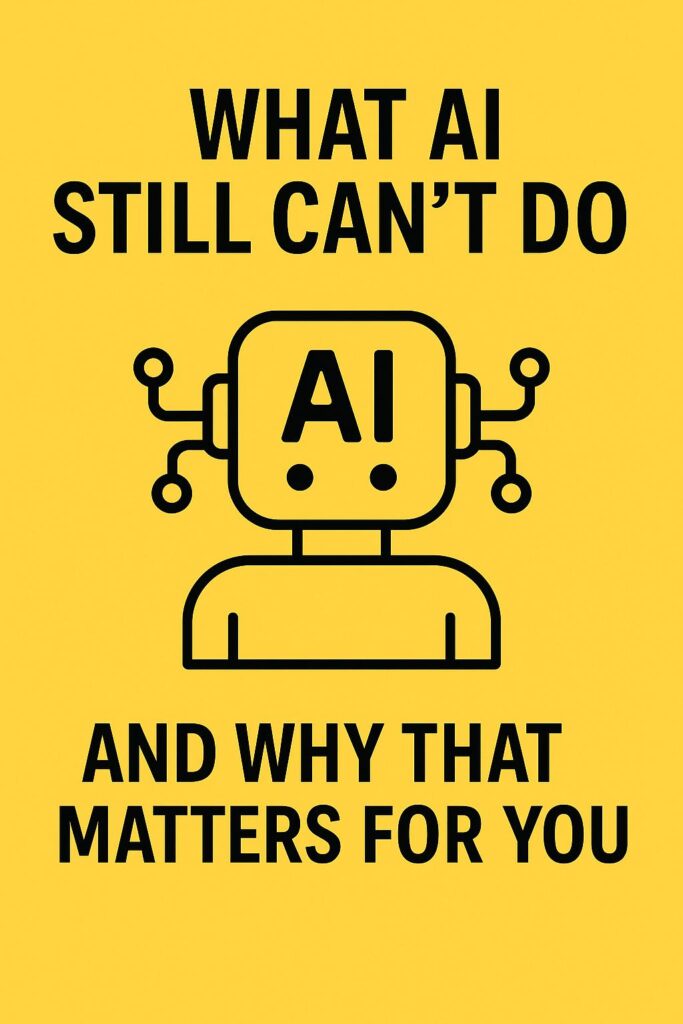
Where AI Falls Short — And Why That Matters
It would be dishonest to write about AI in marketing without being upfront about its limits, because there absolutely are limits, and pretending otherwise sets businesses up for disappointment.
AI is very good at pattern recognition, optimization, and repetition. It is not good at understanding the specific, subtle context of your brand, your community, or your customers’ actual lived experience. It doesn’t know that your neighborhood has a particular sensitivity around a certain topic, or that a competitor recently had a scandal that changes how your messaging should land this month, or that a joke that works perfectly in one culture falls completely flat in another.
This is why the businesses getting genuinely good results from AI aren’t the ones who’ve handed over the keys entirely. They’re the ones using AI to handle the repetitive, data-heavy, time-consuming parts of marketing — drafting, testing, monitoring, following up — while a human stays firmly in charge of strategy, judgment calls, and the parts of the brand that require genuine understanding of people.
There’s also the trust question. Customers today are increasingly good at spotting content that feels generic or automated, and a brand that leans too heavily on AI-generated everything, without a human touch anywhere in the process, risks feeling hollow. The businesses that get this balance right treat AI as a very capable assistant, not a replacement for the people who actually understand the business and its customers.
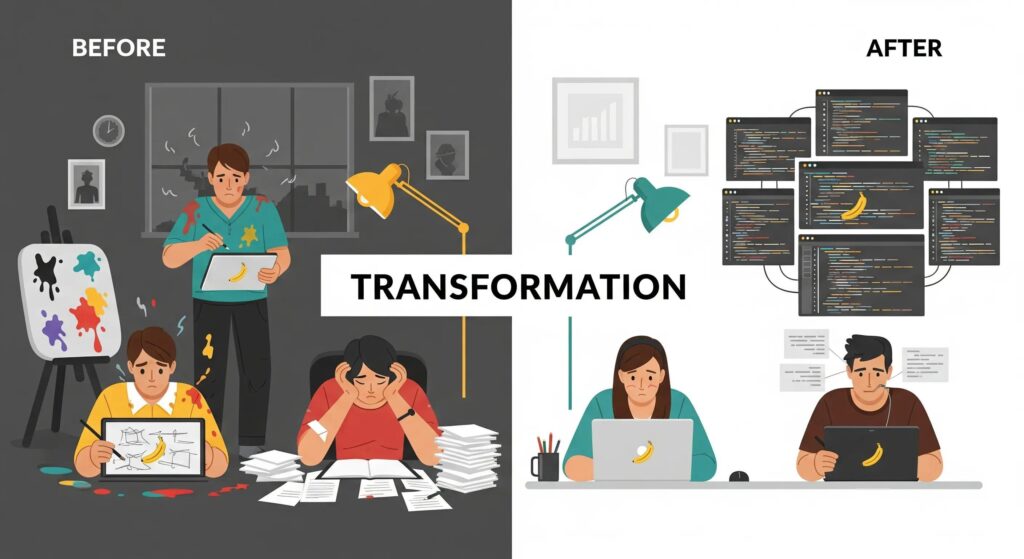
A Closer Look: What Changed Between 2023 and Now
It’s worth pausing on just how quickly this shifted, because the pace of change is part of why so many business owners feel like they’re playing catch-up. Back in 2023, most conversations we had with clients about AI centered around novelty — could a chatbot handle basic customer questions, could a tool auto-generate a week’s worth of social captions. Useful, but limited, and honestly a little gimmicky in practice. The output often needed heavy editing, and the “automation” was really just templated responses dressed up with a new label.
By 2024, the tools started getting genuinely useful for drafting — the writing quality improved enough that a first draft from an AI tool could actually save real time rather than just shifting the work from “writing” to “fixing bad writing.” That was the first real inflection point.
What’s different now, in 2026, is that the value has moved from content generation to decision-making. The tools aren’t just helping you write faster — they’re helping you decide where to spend your next dollar of ad budget, which lead to prioritize calling back first, and which piece of creative to scale up before a human even finishes reviewing the weekly report. That’s a fundamentally different kind of value, and it’s why the conversation with clients has shifted from “should we try this” to “why isn’t this already running in the background of everything we do.”
Understanding this trajectory matters because it tells you something about what’s coming next. If content generation was the first wave and decision-support was the second, the businesses paying attention are already starting to see a third wave forming — tools that don’t just flag a problem or suggest an action, but execute reasonable, low-risk decisions autonomously within boundaries a business owner sets in advance. We’re not fully there yet in a way we’d recommend handing over blindly, but it’s close enough that it’s worth watching rather than dismissing.
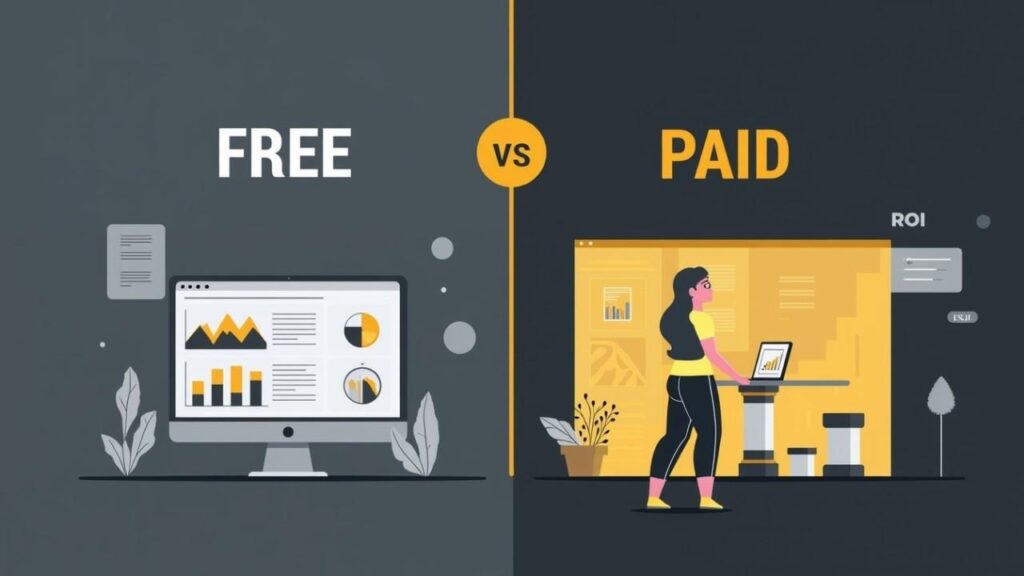
A Word on Cost and Accessibility
One thing worth addressing directly, because it comes up in nearly every conversation we have about this: business owners often assume AI-powered marketing tooling is expensive, complex, and built for companies with dedicated tech teams. That assumption made a lot more sense a few years ago than it does today.
Most of the tools we’ve mentioned here — predictive ad optimization inside Meta and Google’s own platforms, automated follow-up sequences, AI-assisted content drafting — are either already included in tools you’re likely paying for, or available at a cost that’s genuinely reasonable for a small or mid-sized business. You don’t need a custom-built system or an in-house data science team to benefit from any of this. What you need is someone who understands which features actually matter for your specific business and can set them up correctly, which is often less about budget and more about knowing where to look.
This is an important point because a lot of businesses hold back from adopting these tools simply because they assume it’s out of reach, when in reality the barrier to entry has dropped significantly. The businesses falling behind aren’t the ones without the budget — they’re the ones who haven’t yet taken the time to understand what’s already available to them.
How we do it at Admark
We’re not into using AI just to say we use AI. There’s a lot of noise right now around agencies advertising themselves as “AI-powered” without much substance behind the claim, and we’ve made a conscious choice not to be one of them.
Every tool we bring into a client’s marketing has to answer one question first: does this genuinely get better results, faster, without losing the brand’s voice or the audience’s trust? If the answer is yes, we build it in. If it’s just a shiny feature that doesn’t actually move the numbers that matter — enquiries, conversions, revenue — we leave it out, no matter how impressive it sounds in a pitch deck.
This is also why we spend real time understanding a client’s brand, their customers, and their market before we bring any automation or AI tooling into the mix. The technology is only as good as the strategy behind it. A perfectly optimized ad campaign for the wrong message still fails. A beautifully automated follow-up sequence with the wrong tone still loses trust. Getting the human part right first is what makes the AI part actually worth using.
The Bigger Picture for 2026 and Beyond
AI in marketing isn’t going to slow down or become less relevant — if anything, the gap between businesses using it well and businesses ignoring it is going to keep widening. But the winning approach isn’t about adopting every new tool the moment it launches. It’s about being deliberate: understanding what each tool actually does, where it genuinely saves time or improves results, and where it needs a human hand to keep things authentic and on-brand.
The businesses that will look back on 2026 as a genuine turning point won’t be the ones who chased every AI trend. They’ll be the ones who picked the handful of tools that mattered for their specific business, implemented them properly, and used the time saved to focus more energy on the things AI still can’t do — building real relationships, understanding their customers deeply, and making the judgment calls that come from actually knowing your market.
Curious what AI-driven marketing could genuinely do for your business, without the hype and without the guesswork?
Get in touch with Admark, and let’s figure out exactly where it would move the needle for you.