How GEO Is Different From Traditional SEO
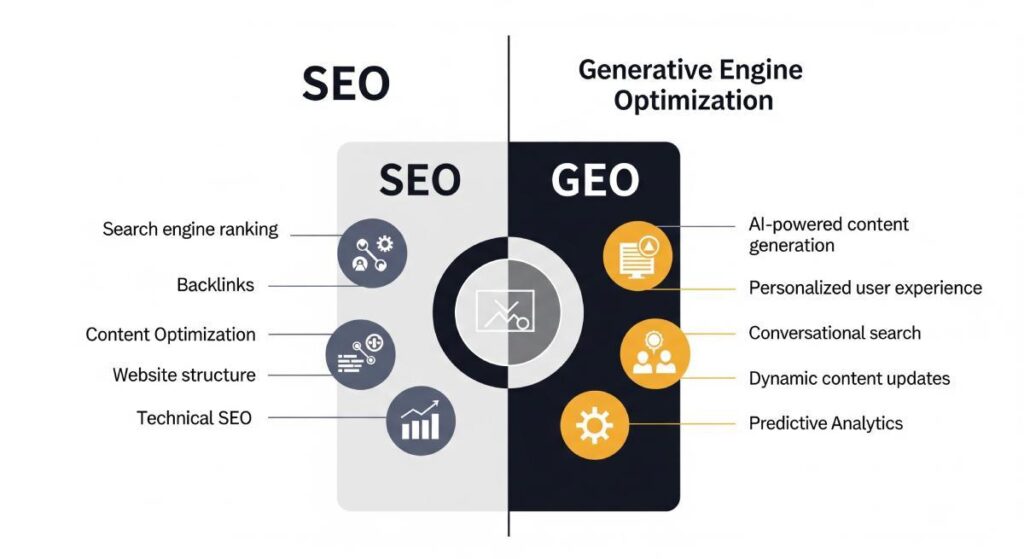
It helps to break this down practically. Traditional SEO strategy typically revolves around keyword density, backlink profiles, page speed, meta tags, and domain authority. These factors still matter — they haven’t disappeared. But GEO adds a new layer of requirements on top:
Clarity over cleverness. AI models reward content that answers questions directly and clearly, without excessive fluff. If your blog post takes 400 words to say what could be said in 100, generative engines are less likely to extract and cite it.
Structured, extractable content. Generative engines love well-organized information — bullet points, clear headings, definitions, comparison tables, and FAQs. Content that’s easy for a machine to parse is content that’s easy for a machine to quote.
Authoritativeness and originality. AI systems are trained to prioritize trustworthy, well-sourced information. Original data, unique insights, case studies, and expert commentary carry far more weight than generic, recycled content.
Semantic completeness. Rather than obsessing over a single keyword, GEO-friendly content covers a topic comprehensively, answering related questions a reader (or an AI model) might have. This is often called topical depth, and it’s central to how generative engines evaluate relevance.
Brand consistency across the web. AI models often cross-reference multiple sources to validate information. If your business’s name, services, and expertise are described consistently across your website, directories, social platforms, and press mentions, it strengthens your credibility in the eyes of these systems.
Practical GEO Strategies Businesses Should Implement in 2026
1. Answer Questions Directly at the Start of Your Content
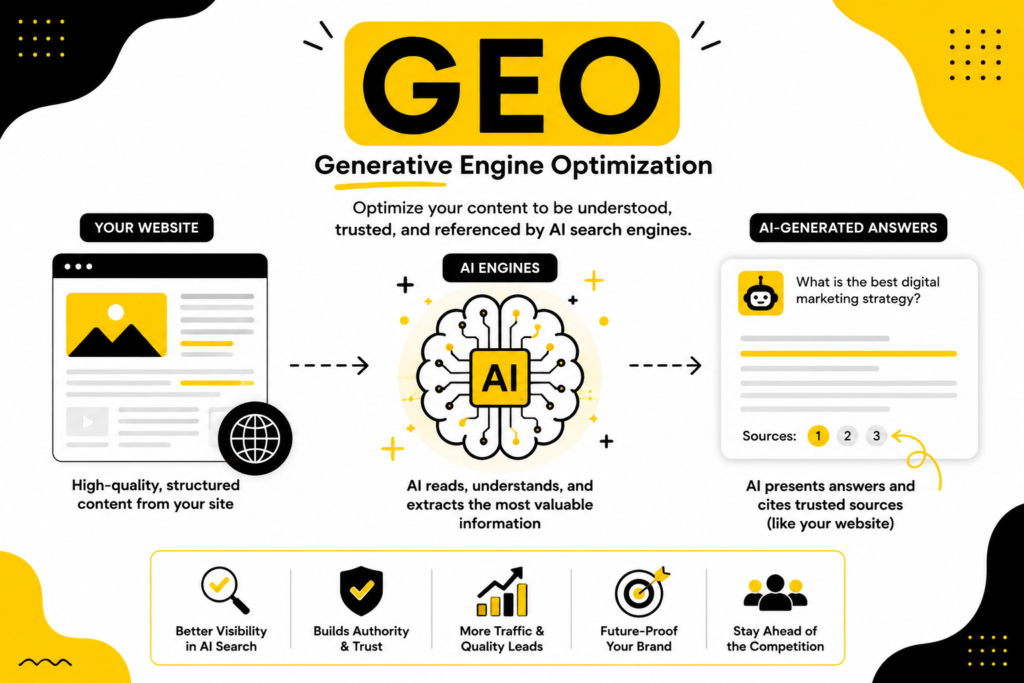
Generative engines favor content that gets to the point. Structure your blog posts and web pages so the first paragraph after a heading directly answers the implied question. Save the elaboration, context, and storytelling for after that direct answer. This single change can significantly improve how often your content gets pulled into AI-generated responses.
2. Use Structured Data and Schema Markup
Schema markup helps search engines and AI crawlers understand exactly what your content is about. FAQ schema, article schema, organization schema, and review schema all give generative engines cleaner signals to work with. If your website doesn’t have structured data implemented yet, this should be a priority task for 2026.
3. Build Topic Clusters, Not Just Keywords
Instead of writing one blog post targeting one keyword, build a network of interlinked content around a central topic. For example, a business writing about “SEO strategy 2026” should also cover related subtopics like AEO (Answer Engine Optimization), AI search behavior, technical SEO checklists, and content optimization tips — all linked together. This topical depth signals authority to both traditional search engines and generative AI models.
4. Optimize for Conversational, Long-Tail Queries
People phrase questions to AI chatbots very differently than they type into a Google search bar. Instead of typing “digital marketing agency Doha,” a user might ask an AI assistant, “Which digital marketing agency in Doha is best for a small retail business with a limited budget?” Businesses should research and incorporate these longer, more natural language queries into their content.
5. Maintain Fresh, Regularly Updated Content
AI models tend to favor recently updated, accurate information, especially for fast-changing industries like marketing, technology, and finance. Set a schedule to revisit and refresh your top-performing content every few months, updating statistics, examples, and recommendations.
6. Strengthen E-E-A-T Signals
Experience, Expertise, Authoritativeness, and Trustworthiness remain foundational, and they matter even more in a generative search world. Add author bios, cite credible sources, showcase case studies and client results, and make sure your website clearly communicates who you are and why you’re credible in your field.
7. Get Mentioned Across the Web
Generative engines don’t just crawl your website — they draw from a broad web of sources, including news articles, directories, forums, and social platforms. A strong digital PR and citation-building strategy, getting your business mentioned and linked across relevant, credible sites, increases the chances that AI models recognize and trust your brand.
GEO and AEO: Understanding the Bigger Picture
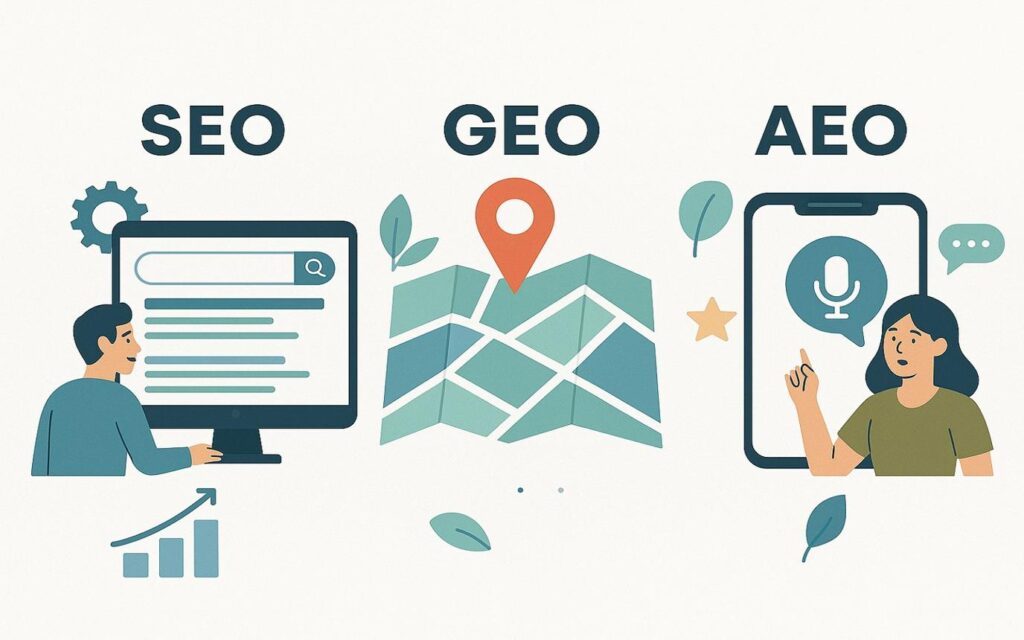
You may also come across the term AEO, or Answer Engine Optimization. While closely related to GEO, AEO focuses specifically on optimizing content to directly answer questions in formats like featured snippets, voice search results, and AI-generated direct answers. Think of GEO as the broader strategy for generative AI visibility, and AEO as a more specific tactic within that strategy, focused on question-and-answer style content.
Together, GEO and AEO represent where SEO strategy is heading in 2026 and beyond: a world where visibility isn’t just about ranking on a page, but about being the trusted source behind an answer.
Common Mistakes Businesses Make With GEO
Many businesses jumping into GEO make a few avoidable mistakes. The first is treating it as a replacement for SEO rather than an extension of it — neglecting technical SEO fundamentals like site speed, mobile-friendliness, and clean site architecture will hurt you regardless of how well-optimized your content is for AI. The second mistake is producing thin, generic content stuffed with keywords instead of genuinely useful, well-researched material. Generative engines are specifically designed to detect and deprioritize low-value content. The third mistake is ignoring measurement — businesses need to start tracking AI-driven referral traffic and brand mentions in AI-generated answers, not just traditional organic rankings, to understand what’s actually working.
Getting Started: A Simple GEO Checklist
Final Thoughts
SEO isn’t dying — it’s evolving. Generative Engine Optimization is simply the next layer businesses need to build on top of their existing SEO foundation. The businesses that adapt now, while most competitors are still catching up, will have a significant head start in owning visibility across both traditional search results and the new generation of AI-powered answers.
If your 2026 SEO strategy doesn’t yet account for how AI models discover, evaluate, and cite content, now is the time to change that. The businesses that show up inside AI-generated conversations today will be the ones customers remember and trust tomorrow.